
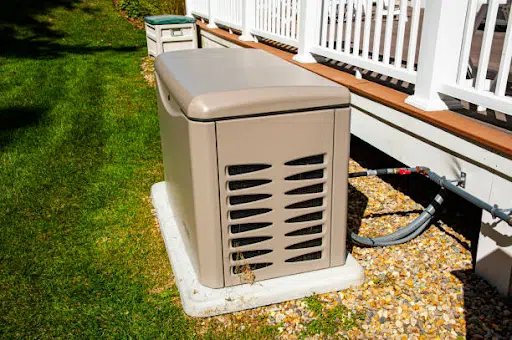
If you live in North Florida, you already know what a long power outage feels like. Hurricane season rolls in, the grid goes down, and the AC, the fridge, and the well pump all go quiet. A standby generator fixes that. The first question every homeowner asks us is simple: what is the whole house generator cost installed, start to finish?
Here is the honest answer. Most Florida homeowners spend somewhere between $7,000 and $18,000 for a whole house generator installed, including the unit, labor, the transfer switch, the concrete pad, and permits. Smaller systems for essential circuits land near the bottom of that range. Larger units that run an entire home with multiple AC systems sit at the top. Your number depends on the size you need, the fuel you run, and how much electrical and site work the job takes.
This guide walks through every piece of that cost so you can budget with real numbers instead of guesswork. We install Generac standby generators across Lake City, Live Oak, Macclenny, Gainesville, and the rest of North Florida, and we put the same breakdown in front of every customer at the kitchen table.
Want a firm number for your home? Request a free generator estimate and we will size it on site.
What Drives the Whole House Generator Cost Installed
The price you pay is really five separate costs stacked together. Knowing what each one covers tells you where your money goes and where you have room to adjust.
- The generator unit. This is the single biggest line item. Air-cooled standby units in the 10kW to 26kW range carry the bulk of the cost, and the price climbs with capacity.
- Installation labor. A licensed electrician sets the unit, wires it to your panel, and connects the transfer switch. This is skilled work, not a weekend project.
- The automatic transfer switch. The ATS is the brain of the system. It senses the outage, disconnects you from the grid, and starts the generator on its own. More on this below.
- Fuel connection. Natural gas or propane has to reach the unit. If a gas line or propane tank is not already in place, that adds to the bill.
- Permits, inspection, and site prep. Permanent generators need a permit, an inspection, and a level concrete pad to sit on.
A simple install on a home that already has a gas line and an easy equipment location runs lean. A complex one with a long fuel run, a panel that needs upgrading, and a tight property costs more. That gap is why national “average” numbers are almost useless until someone looks at your house.
Whole House Generator Cost by Size
Generator capacity is measured in kilowatts (kW). Bigger homes and bigger electrical loads need more kW, and more kW means a higher price. Here is how installed cost generally tracks with size, based on current industry pricing across major brands.
| Generator Size | What It Powers | Typical Installed Cost |
|---|---|---|
| 10 to 13 kW | Essential circuits: fridge, well pump, some lights and outlets, one small AC | $7,000 to $11,000 |
| 14 to 18 kW | Essentials plus central AC, water heater, more of the home | $9,000 to $13,000 |
| 20 to 24 kW | Most of a typical home, including HVAC and major appliances | $11,000 to $16,000 |
| 26 kW and up | A full large home with multiple AC units and heavy loads | $14,000 to $18,500+ |
These are installed figures, meaning the unit and the work to put it in. Treat them as a planning range, not a quote. The only way to land on your real number is an on-site evaluation, because two homes the same size can need very different systems.
How Much Is a Generator for a 2,000 Sq Ft House Installed?
This is one of the most common questions we get, so it earns its own answer. A 2,000 square foot home in North Florida usually needs a generator in the 20kW to 24kW range to run central AC, the fridge, the water heater, and lighting at the same time. Installed, that lands most homeowners in the $11,000 to $16,000 window.
Square footage alone does not size a generator, though. A 2,000 square foot house with two AC units and an electric range needs more capacity than the same size house with one efficient heat pump. We size by load, not by floor area, which is why the on-site visit matters.
What Whole House Generator Installation Includes
When you see an installed price, it covers a lot more than dropping a unit in the yard. A proper installation includes:
- A load calculation and sizing. We figure out what you actually need to power, then match the generator to it.
- The concrete pad or composite base. The unit needs a stable, level foundation that meets code.
- Setting and leveling the generator. These units are heavy and have to sit exactly right.
- The automatic transfer switch. Wired into your electrical panel so the system runs on its own.
- Electrical connections. Tying the generator and transfer switch into your home safely and to code.
- The fuel hookup. Connecting natural gas from the utility or a propane line from your tank.
- Permits and inspection. We pull the permit and handle the inspection so the install is signed off.
- Startup and testing. We run the system, confirm the transfer works, and show you how it operates.
That full scope is why professional installation is not optional on a standby unit. Wiring a generator into your panel wrong can back-feed the grid and seriously hurt a utility lineman working to restore power. This is licensed electrical work, and in Florida it has to be permitted and inspected. Our crews are licensed in Florida and Georgia, and every install goes through that process.
The Transfer Switch and Why It Matters
The automatic transfer switch is the part most homeowners have never heard of, and it is the reason a standby generator feels seamless. When the grid drops, the ATS senses it in seconds, isolates your home from the utility lines, and signals the generator to start. When grid power returns, it switches you back and shuts the generator down. You do not flip anything or drag out extension cords.
The transfer switch is built into the installed cost, but it is worth understanding because it separates a real standby system from a portable generator. If you are still weighing your options, our breakdown of the different generator types for backup power compares portable and standby units. Portable units need manual hookups and can be dangerous if connected wrong. A hardwired transfer switch is what makes whole house backup safe and automatic. You can read more on our whole house generator page for the full rundown of how a standby system goes together.
Generac Generator Installation Cost
Generac is the brand we install most, and it is the one most North Florida homeowners ask about by name. Generac generator installation cost runs in the same ranges shown above, with the popular 22kW and 24kW Guardian units landing in the $11,000 to $16,000 zone installed for most homes.
We are a PowerPro Premier Generac dealer, which is Generac’s top dealer tier. That means our crews are trained on these units, we stand behind the warranty, and we handle sales, installation, and service in one place. If you want to compare models and capacities before you budget, our Generac generator lineup breaks down the sizes side by side. Generac also publishes its own home standby installation overview if you want the manufacturer’s view.
Fuel Type: Natural Gas vs Propane in North Florida
Fuel choice affects both your upfront install and what you spend to run the generator over the years. In our area it usually comes down to two options.
Natural gas is the simplest if your home already has a gas line. The generator taps into the existing supply, so there is no tank to fill and no running out during a long outage. The catch is that not every home in Columbia, Suwannee, Baker, or Alachua county has natural gas service at the street.
Propane is the common answer when natural gas is not available, which is a lot of rural North Florida. You run the generator off a propane tank on your property. It works anywhere, but you have to keep the tank filled, and a long outage can burn through fuel faster than people expect.
Diesel exists too, but for home standby units in our region it is rare. For most homeowners here, the real decision is natural gas if you have it, propane if you do not. We help you weigh that during the estimate based on what is actually available at your address.
Additional Costs to Budget For
A few costs sit outside the base install, and skipping past them is how people get surprised. Keep these on your radar:
- Panel upgrade. If your electrical panel is old or undersized, it may need work before a generator can tie in. An electrical panel upgrade is sometimes part of the project, and it is worth knowing before you budget.
- Propane tank. If you go propane and do not have a tank, that is an added cost, either purchased or leased.
- Long fuel runs. The farther the unit sits from the gas source, the more pipe and labor the connection takes.
- Annual maintenance. Plan for routine service to keep the warranty valid and the unit reliable. A standby generator needs regular upkeep the same way a vehicle does.
Maintenance is the one ongoing cost people forget. These units run themselves for years, but they need oil changes, filter changes, and load tests to stay dependable. Our guide to generator maintenance covers what that schedule looks like.
Is a Whole House Generator Worth It in Florida?
For a lot of North Florida homeowners, yes. Hurricane season brings outages that can stretch for days, and the grid does not have to take a direct hit to go down. When it does, a standby generator keeps the AC running, the food cold, the well pump working, and any medical equipment powered. For families with someone on a CPAP, oxygen, or refrigerated medication, that is not a luxury.
There is a home value angle too. In a market where storm outages are a fact of life, a permanently installed generator is a feature buyers notice. Whether the math works for you depends on how often your area loses power and how much an outage actually costs you in spoiled food, hotel stays, and lost work. We will not push a unit you do not need. If a smaller system covers your essentials, we will tell you. To see how others in the area think it through, our post on why a backup generator makes sense for Florida homes lays out the case.
How to Get an Accurate Price for Your Home
National averages get you in the ballpark. They cannot price your specific house. The real number comes from an on-site evaluation where an installer looks at your panel, your loads, your fuel options, and where the unit can go.
Here is what a good estimate accounts for:
- The total electrical load you want to back up
- Your panel’s condition and whether it needs an upgrade
- Natural gas availability or propane tank setup
- How far the unit sits from the fuel source and the panel
- The pad location and any site prep
- Local permit and inspection fees
We give free, on-site estimates across North Florida, and we put it all in writing with clear pricing so there are no surprises after the work starts. If financing helps, we have financing options that let you spread the cost out instead of paying everything upfront.
Frequently Asked Questions
How much does a whole house generator cost installed?
Most homeowners spend between $7,000 and $18,000 for a whole house generator installed, including the unit, labor, transfer switch, concrete pad, and permits. Smaller systems that cover essential circuits cost less, while large units that run an entire home with multiple AC systems cost more. Your final price depends on generator size, fuel type, and how much electrical and site work the job needs.
How much is a generator for a 2,000 sq ft house installed?
A 2,000 square foot home in Florida usually needs a 20kW to 24kW generator to run central AC and major appliances at the same time. Installed, that puts most homeowners in the $11,000 to $16,000 range. Square footage is only a starting point, though. The real driver is your electrical load, which is why we size every system on site.
What is the average cost to hook up a generator to your house?
Hooking up a standby generator covers the transfer switch, the wiring into your electrical panel, and the fuel connection, all of which are built into the installed price rather than billed separately. Labor and the transfer switch typically make up several thousand dollars of the total. A portable generator hookup costs far less but does not provide automatic whole house backup.
How long does whole house generator installation take?
Once the permit is in hand and the unit is on site, most residential installs take one to two days of work. The longer part is often the lead time before that: sizing the system, ordering the unit, and pulling the permit. We give you a realistic timeline with your estimate so you know what to expect from start to finish.
Does Generac generator installation cost more than other brands?
Generac generator installation cost falls in the same range as other major standby brands, with popular 22kW and 24kW units installed in the $11,000 to $16,000 zone for most homes. Generac is widely available and well supported, and as a PowerPro Premier dealer we handle the unit, the install, and the service together, which keeps the process simple.
Do I need a permit to install a whole house generator in Florida?
Yes. A permanently installed standby generator requires a permit and a final inspection in Florida. The work also has to be done by a licensed electrician because it ties into your home’s electrical system. We pull the permit, schedule the inspection, and make sure the install meets code as part of the job.
Ready for Reliable Backup Power?
A whole house generator is a real investment, and you deserve a clear, honest price before you commit. We size every system on site, install Generac units across North Florida, and put everything in writing with no surprises once the work begins. After the install we keep it running with annual generator maintenance.
Find the right size and the right number for your home before the next storm.