

A portable generator for home use costs less and runs a fridge, lights, and a few circuits, but you set it up, fuel it, and connect it safely. A whole-house generator starts on its own, runs on natural gas or propane, and can carry central AC. The right pick depends on what must keep running.
Power goes out here more often than people expect, and rarely because of a named storm. A summer thunderstorm, a tree on a line, or scheduled utility work can cut power for an afternoon or a couple of days. We sell, install, and service home generators across Columbia County and North Florida, and we don’t push everyone toward a whole-house unit. For some homes, a portable is the smarter buy.
What’s the Difference Between a Portable and a Whole-House Generator?
Here’s the side-by-side most homeowners want before they start pricing anything.
| Feature | Portable generator | Whole-house (standby) generator |
|---|---|---|
| Where it lives | Stored when not in use; always run outdoors, away from doors, windows, and vents | Permanently installed outdoors on a pad |
| How it starts | Manual pull-start or electric start, depending on model | Starts automatically when utility power is interrupted |
| How it connects | Extension cords to individual appliances, or one cord to an inlet box with a transfer switch or interlock | Hardwired through an automatic transfer switch |
| Fuel | Usually gasoline; some run on propane or both | Natural gas or propane from your home’s supply |
| Runtime | Depends on tank size, electrical load, and model; expect to refuel during longer outages | Runs through extended outages as long as the fuel supply holds |
| What it can power | Selected appliances or circuits, depending on generator capacity | Essentials up to the whole house, depending on size |
| Your job during an outage | Set it up, start it, fuel it, and keep an eye on the load | Nothing |
| Upkeep | Routine oil changes, fresh or stabilized fuel, and periodic test runs | Scheduled self-test (usually weekly) and annual professional service |
The biggest practical difference is how much work you have to do when the power goes out.
What Can a Portable Generator for Home Actually Power?
A properly sized portable generator can cover many household essentials: a refrigerator, a chest freezer, some lights, phone chargers, internet equipment, and possibly a window AC unit. Some larger portables can also handle a well pump or a smaller central AC system, depending on the generator’s capacity, the starting requirements of that equipment, and what else is running at the same time.
What often trips people up is starting power. Motors in AC compressors, well pumps, and refrigerators draw far more power for the first few seconds than they use while running. A portable generator that handles your refrigerator just fine can overload when another motor kicks on at the same moment. That’s why sizing a portable means adding up both running and starting watts for everything you expect to run at once.
Can a portable generator run an entire house? In some situations, but usually only with careful load management. Homes with big electrical loads, such as central air, an electric water heater, and an electric range, can quickly exceed what most portable generators put out.
How Do You Connect a Portable Generator to Your House Safely?
Connecting a portable generator safely matters as much as choosing the right size. The right setup depends on what you need to power, your generator, and your home’s electrical system.
Option 1: Heavy-duty, outdoor-rated extension cords. For a few plug-in appliances, run properly rated extension cords from the generator, following the generator manufacturer’s instructions. The generator itself stays outdoors, a safe distance from the house and away from doors, windows, vents, and any other opening where carbon monoxide could get in.
Option 2: A power inlet with a transfer switch or interlock. A licensed electrician installs an inlet box on the outside wall and a manual transfer switch or an approved interlock at your panel. You plug the generator into the inlet with one cord, flip the switch, and power the circuits you’ve chosen, including hardwired loads like a well pump that you can’t plug into a cord. For most homeowners keeping a portable long term, this is the setup we recommend.
The shortcut to never take: plugging the generator into a wall outlet with a double-ended cord. The Consumer Product Safety Commission warns that this practice, called backfeeding, is extremely dangerous and presents an electrocution risk to utility workers and neighbors served by the same transformer. It also bypasses some of the built-in protection in your home’s wiring.
A transfer switch or interlock keeps utility power and generator power from ever meeting. Because that work happens inside your electrical panel, it belongs to a licensed electrician, not a weekend DIY project. Our electricians are licensed in Florida and Georgia.
If you’d like a portable wired the right way, contact us for a free estimate on an inlet and transfer switch.
Where Should a Portable Generator Sit While It Runs?
Outside, and farther away than most people think. Ready.gov advises using generators outdoors and at least 20 feet away from windows, doors, and attached garages. Carbon monoxide is colorless and odorless, so you won’t notice it building up.
A few more safety rules for running a portable:
- Never run a generator inside a home or garage, even with the garage door open.
- Point the exhaust away from the house and from nearby doors, windows, and other openings.
- Make sure your home has working carbon monoxide alarms.
- Keep the generator dry and out of the rain, following the manufacturer’s instructions.
- Turn the generator off and let it cool before refueling.
- Store gasoline in approved containers, following the manufacturer’s guidance and local fire-safety rules.
This is the part of owning a portable that’s easy to underestimate. A whole-house standby generator, by comparison, is permanently installed in an approved outdoor spot, with clearances set by the manufacturer and local code during a professional installation.
What Does a Whole-House Generator Do Differently?
A whole-house standby generator automates most of the backup-power process. It’s permanently installed outdoors, connects to natural gas or propane, and works with an automatic transfer switch.
When utility power is interrupted, the system starts the generator and transfers your selected electrical load to it. When utility power returns, it switches the house back to the grid and shuts the generator down after a short cool-down. That means backup power comes on even when you’re at work, asleep, or away from home.
Runtime is the other big difference. A gasoline portable needs refueling by hand, while a standby generator on natural gas has a continuous fuel source as long as gas service stays on. Propane runs until the tank is empty. Actual runtime depends on the generator, the electrical load, the fuel supply, and the manufacturer’s recommendations.
Automatic backup matters most for homes that rely on air conditioning, a well pump, medical equipment, refrigeration, or home-office equipment. Size matters here. The generator and transfer switch have to match the loads you want to keep running.
A standby unit also runs a scheduled self-test and needs a yearly professional service. Our generator maintenance checklist covers what that involves for both portable and standby units.
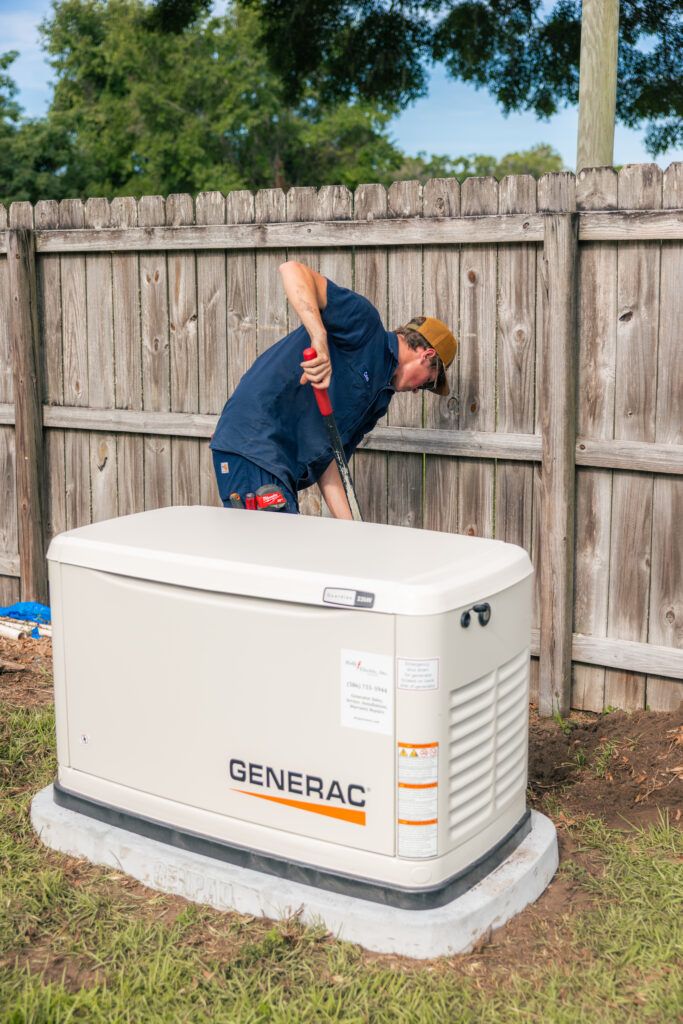
We install and service multiple generator brands, including KOHLER, Generac, and Cummins, so we can recommend and size a system based on your home’s backup-power needs rather than a single manufacturer’s lineup.
What Are the Downsides of Each?
Neither option is perfect. Here’s the honest list.
Portable generator downsides:
- You have to be home, awake, and able to set it up
- Gasoline models need proper fuel storage and fresh fuel
- Runtime is limited by tank size and load, so longer outages mean refueling
- Carbon monoxide risk if it’s placed wrong
- Noise, especially from open-frame units
- Limited power, so you may have to choose which appliances or circuits run at the same time
Whole-house generator downsides:
- Higher upfront cost than most portable generators
- Installation can involve permits, site prep, a fuel connection, and electrical work
- It needs annual professional service to stay reliable
- Propane homes have to keep an eye on tank levels during extended outages
- It’s permanently installed, so unlike a portable, you can’t take it camping or to a job site
How Do Portable and Whole-House Generator Costs Compare?
A portable generator costs less upfront. If you want to connect it to your home’s electrical panel, the total also includes a professionally installed power inlet and transfer switch or interlock, plus the right cord. Even with those additions, a portable setup is usually the lower-cost way into home backup power.
A whole-house generator costs more because the price covers the unit, the automatic transfer switch, the pad, the fuel connection, permits, and labor. Our whole-house generator cost guide explains what moves that number.
What affects the price and system requirements:
- The electrical loads you want to power during an outage
- Large starting loads, such as central air conditioning or a well pump
- Your existing electrical panel and whether it needs an upgrade
- Natural gas availability or propane tank requirements
- The distance between the generator, the panel, and the fuel source
- Site conditions and local permit requirements
We price the house in front of us, not a one-size-fits-all sticker. Your free estimate spells out what’s included before any work begins.
When Is a Portable Generator the Smarter Buy?
We’ll say it plainly: a whole-house generator isn’t the right answer for every home. A portable generator for home backup often makes more sense if:
- You only need to power a few essential appliances or circuits
- Your outages are usually short, measured in hours rather than days
- You’re comfortable setting up, starting, fueling, and watching a generator during an outage
- You can live with a window AC unit or fans instead of central air for a while
- You also want power for camping, RVs, or projects away from the house
- Budget is the deciding factor right now
Paired with a professionally installed inlet and transfer switch, a portable covers a lot of households well.
When Is a Whole-House Generator Worth It?
A whole-house generator is worth a look when losing power is more than a temporary inconvenience:
- You rely on a well pump and need water during an outage
- Keeping the heat or air conditioning running is a priority for your household
- Someone in the house uses powered medical equipment
- You work from home, travel often, or want backup power to come on when no one is there
- You’d rather have automatic backup than set up, fuel, and watch a portable during an outage
The right system depends on your home’s electrical loads, fuel availability, and how much backup power you want during an outage.
For a broader look at the other options, including inverter generators, see our guide to types of generators for backup power. And if you’re thinking about storm season too, our hurricane preparedness checklist covers the power side of getting your home ready.
Frequently Asked Questions
Can a portable generator run an entire house?
It depends on the generator’s capacity and your home’s electrical loads. Most portable generators are best suited to essentials like refrigeration, lights, selected outlets, and other smaller loads. Central AC, electric water heaters, and electric cooking can push demand well past what a portable puts out.
With a properly installed transfer switch or interlock, a portable generator can power selected circuits in your electrical panel, so you choose which loads run during an outage.
What size portable generator do you need to run a house?
Add up the running watts of everything you want to power at the same time, then account for the starting watts of motor loads like a well pump or AC compressor. Every home and generator is different, so it’s worth having an electrician look at your loads before you buy.
Do I need a transfer switch for a portable generator?
If you want a portable generator to power circuits through your electrical panel, yes: you need an approved transfer switch or interlock. It keeps generator power from backfeeding into the utility lines. If you’re only running individual appliances on properly rated extension cords, you typically don’t need one.
Can you plug a generator into a wall outlet?
No. Never plug a generator into a wall outlet to power your home. It can backfeed the utility lines and create a serious electrocution hazard. Use heavy-duty, outdoor-rated extension cords for individual appliances, or an approved transfer switch or interlock to power circuits through your panel, and never load the generator past its rated capacity.
What are the disadvantages of whole-house generators?
Whole-house generators cost more upfront, and installation can involve site prep, a fuel connection, electrical work, and permits. They need routine maintenance on the manufacturer’s schedule, and propane units depend on the fuel in the tank during extended outages. Because they’re permanently installed, they don’t offer the portability of a portable generator.
Not Sure Which Generator Fits Your Home?
We’ll look at your panel, your must-run loads, and how you want to handle an outage, then give you a straight recommendation, whether that’s a portable generator with the right transfer equipment or a whole-house standby generator.
We’re family-owned, based in Lake City, and serve Columbia County, Alachua County, Live Oak, Macclenny, Ocala, and surrounding areas. Holly Electric is a Certified KOHLER Titanium Tier Dealer and works with multiple brands, including KOHLER, Generac, and Cummins.
Want a straight answer on portable vs. whole-house for your home?